

Made at 62 Hatton Garden
Emerald cut engagement rings
An emerald cut is a step cut, not a brilliant. Long parallel facets run around the stone like steps, and instead of sparkling it flashes: broad planes of light that appear and vanish as the hand moves.
A different kind of light
Brilliant cuts chop light into small bright pieces. A step cut keeps it in long flat sheets, which is the effect jewellers call the hall of mirrors: you look straight down into the stone through a series of parallel ledges.
People who choose an emerald cut almost always say the same thing about it, that it looks calmer and more architectural than a round. It is the least showy of the popular shapes and the one that photographs worst and wears best.
It will show what is inside it
This is the honest warning that comes with the shape, and it is the reason to read this before buying one anywhere. A step cut hides nothing. There is no busy faceting to break up the light, so an inclusion that would be invisible in a round brilliant of the same clarity grade can sit there in plain view.
The practical consequence is that you should expect to buy a higher clarity grade in an emerald cut than you would in a round, and that the grade on the certificate matters less than where the inclusion actually sits. A stone can grade well and still have one feather in exactly the wrong place. That is a judgement made by looking, not by reading.
The same openness applies to colour. A faint tint that a round would disguise will be visible here.
Cropped corners, and why they help
Unlike a princess, an emerald cut has its corners cut off. Those small angled facets remove the fragile points entirely, so despite looking delicate an emerald cut is one of the more robust stones to own and set.
From the workshop archive
Emerald cut settings
-
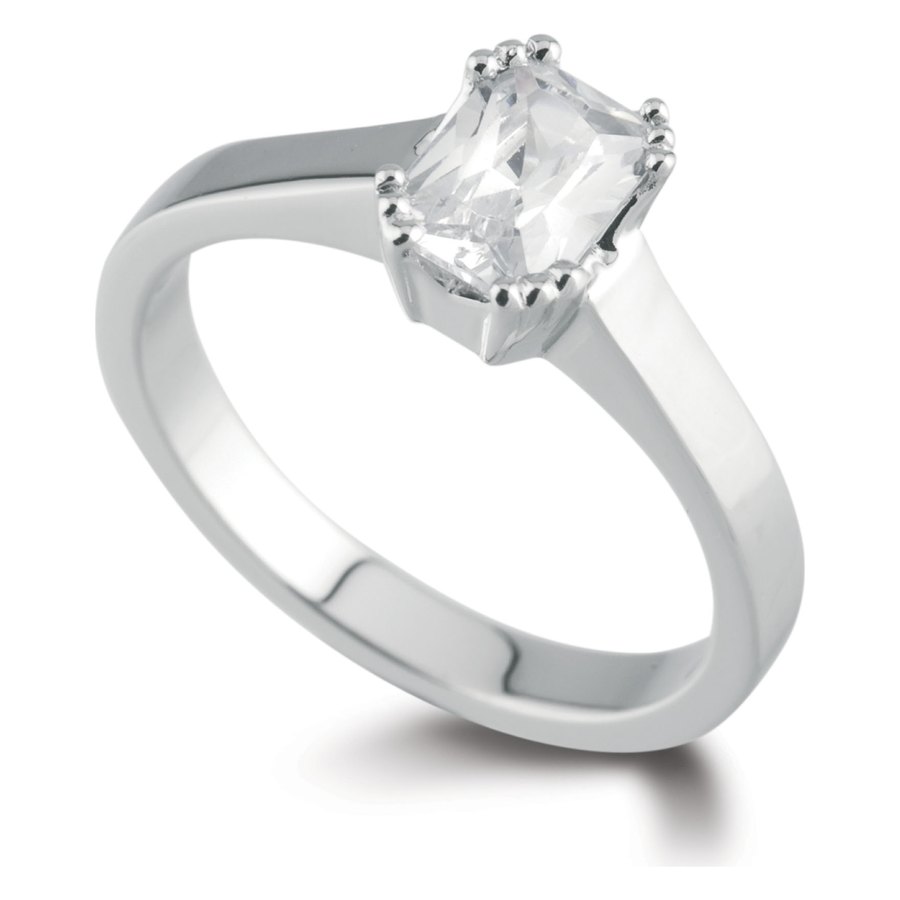
Doubled claws, gripping each corner twice -
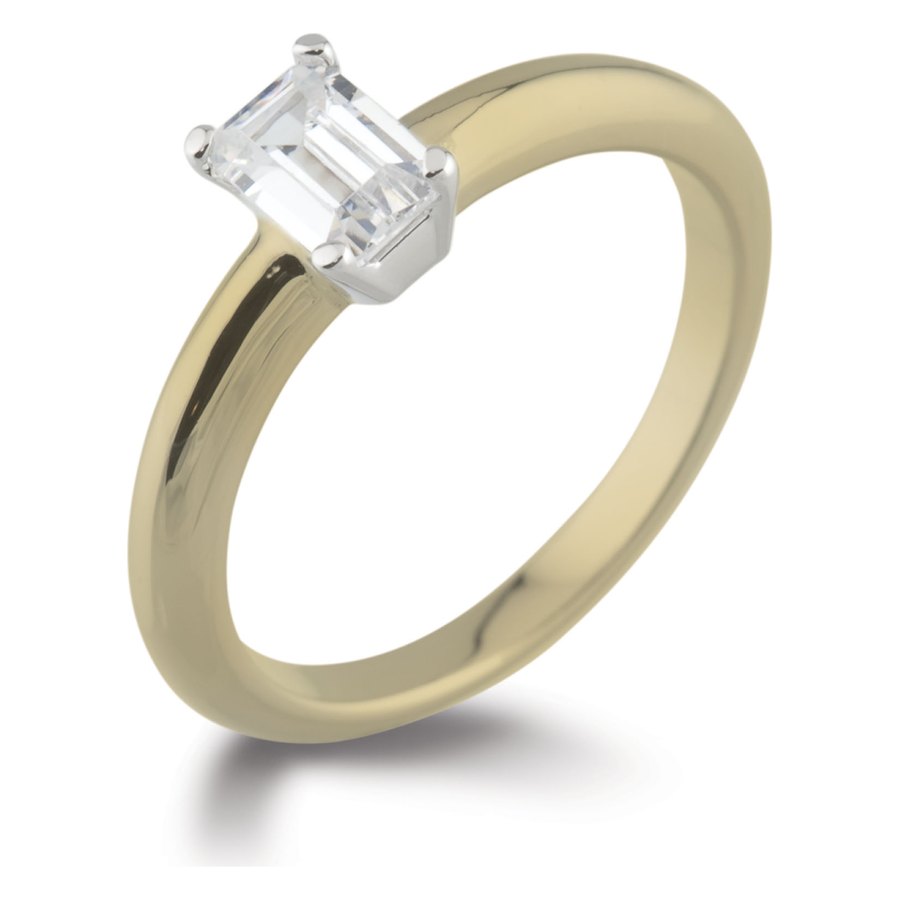
White claws against yellow gold, the stone set across the finger -
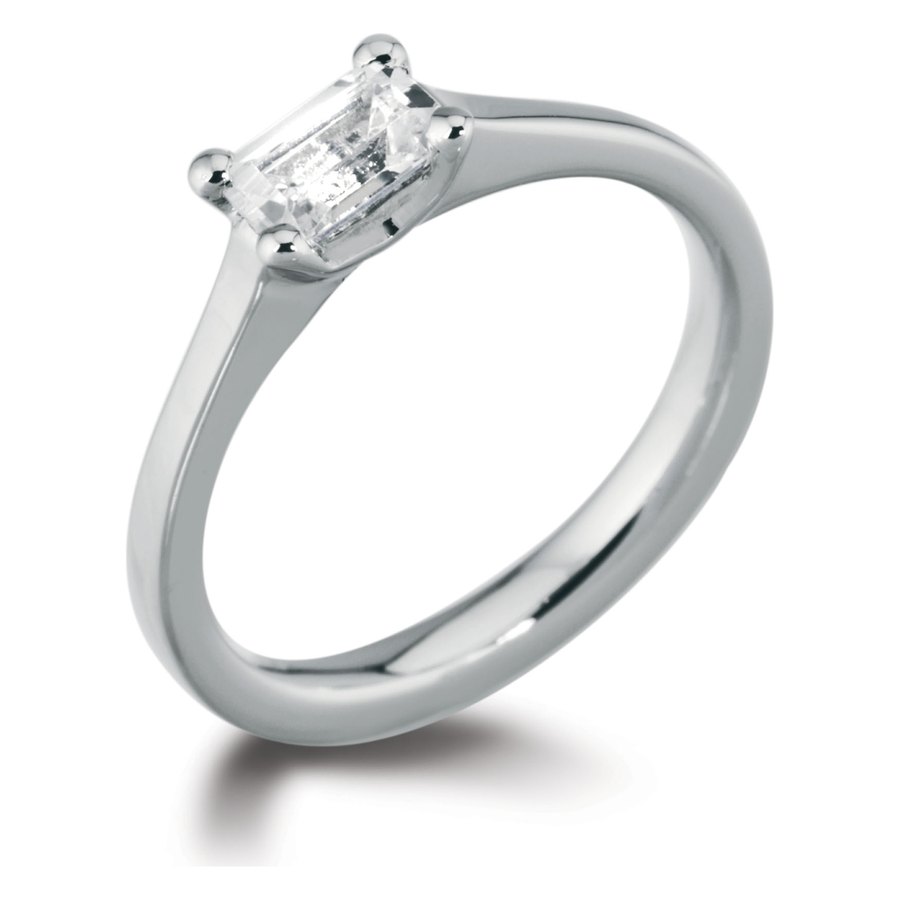
A narrow band, which lets the step cut dominate -
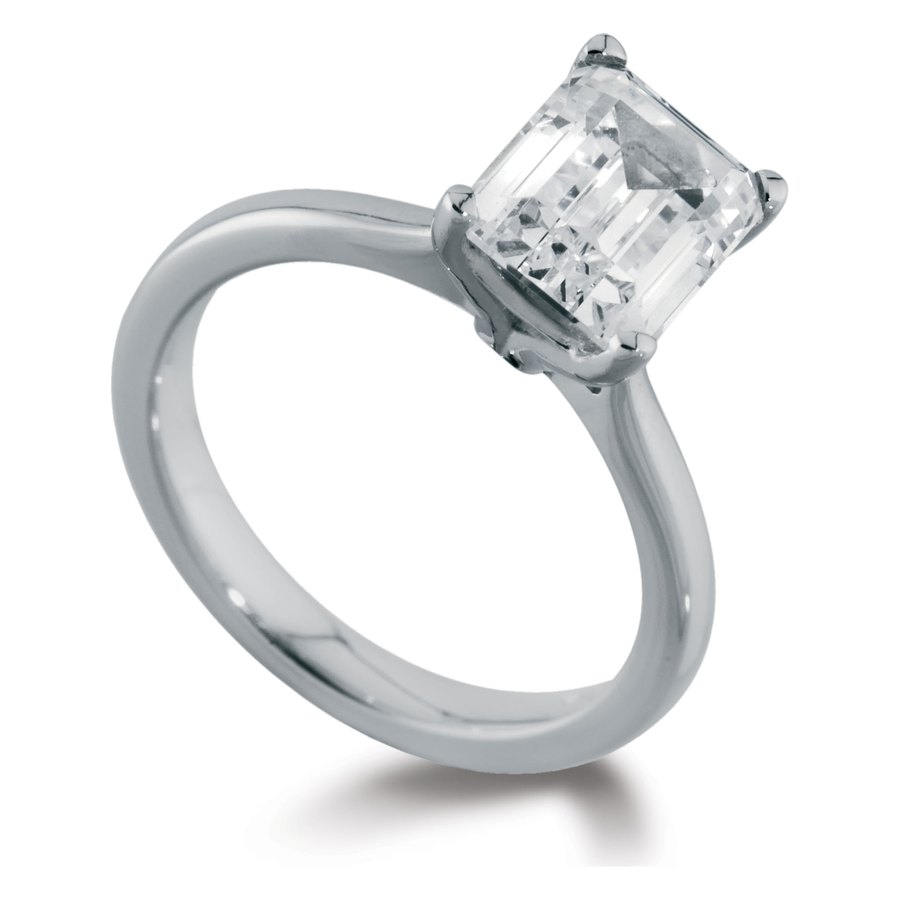
Raised slightly, so light reaches in from the sides


Before you visit
Emerald cut rings: the questions we get asked
Do emerald cut diamonds show inclusions more?
Yes, noticeably. The long parallel facets of a step cut give an inclusion nowhere to hide, where the busy faceting of a round brilliant would break up the light and disguise it. Expect to want a higher clarity grade in an emerald cut, and to judge the stone by looking rather than by the certificate alone.
Are emerald cut diamonds less sparkly?
They sparkle differently. Instead of many small flashes you get broad planes of light that appear and disappear as the hand moves. It is a quieter effect and it is the reason people choose the shape.
Is an emerald cut fragile?
Less than it looks. The corners are cropped rather than sharp, which removes the thin points that make a princess cut vulnerable. It is one of the more robust shapes to wear daily.
Verified on Google
People who had one made
“We had a general idea of the stone and setting we wanted, and Simon worked with us to design something that exceeded every expectation. … We recommend Simon highly and will certainly be back, thank you!!”
“James made us feel so comfortable and made exactly what we wanted so beautifully … We would highly recommend to anyone looking for something very special!”
Other shapes


Worth reading
- How the 4Cs shape what a diamond ring costs Understand how cut, colour, clarity and carat shape what a diamond ring costs in Hatton Garden, and sense-check any price before you buy.
- How a bespoke engagement ring is actually commissioned The real process of commissioning a bespoke engagement ring in Hatton Garden, from first conversation to the day you collect it, with honest timings and costs.
- How a ring is made, step by step Thirty-eight photographs from wax to hallmark, taken on this bench.
- The stones, and how they are chosen Cuts, certification and what to look for before anything is set.