

Made at 62 Hatton Garden
Solitaire engagement rings
A solitaire is one stone and nothing else. Every decision that is left is about how the metal holds it, and those decisions change the ring completely.
Four claws or six
Four claws leave more of the stone uncovered and make the outline read as a square-ish frame. Six claws hold more securely, spread the pressure and make a round stone look rounder. Six is the more conservative choice and the one to take if the ring will never come off.
Claws do wear. They are the part of a ring that thins over twenty years of being knocked against door handles, and they are also the easy part to rebuild. Any solitaire should be looked at every few years, and that is not an upsell, it is the reason old rings survive.
How high the stone sits
A raised setting lets light in under the stone and makes it brighter, and catches on jumpers. A low setting is quieter, more robust and sits flat against a wedding band.
A rub-over goes furthest: a collar of metal right around the girdle, nothing standing proud at all. It shows slightly less of the stone and it is the setting to ask for if the ring is going to be worn through actual daily life rather than taken off for it.
The round brilliant
Most solitaires are round brilliants, and the round is the cut the whole modern trade is calibrated around. Fifty-seven or fifty-eight facets, arranged to send light back at the viewer rather than out of the sides.
It is also the most forgiving shape. All that faceting breaks up the light and hides small inclusions that would be obvious in an emerald cut. That forgiveness is part of why a round costs more per carat than anything else: it is in demand, and cutting one wastes more of the original rough than any other shape.
From the workshop archive
Solitaire settings
-
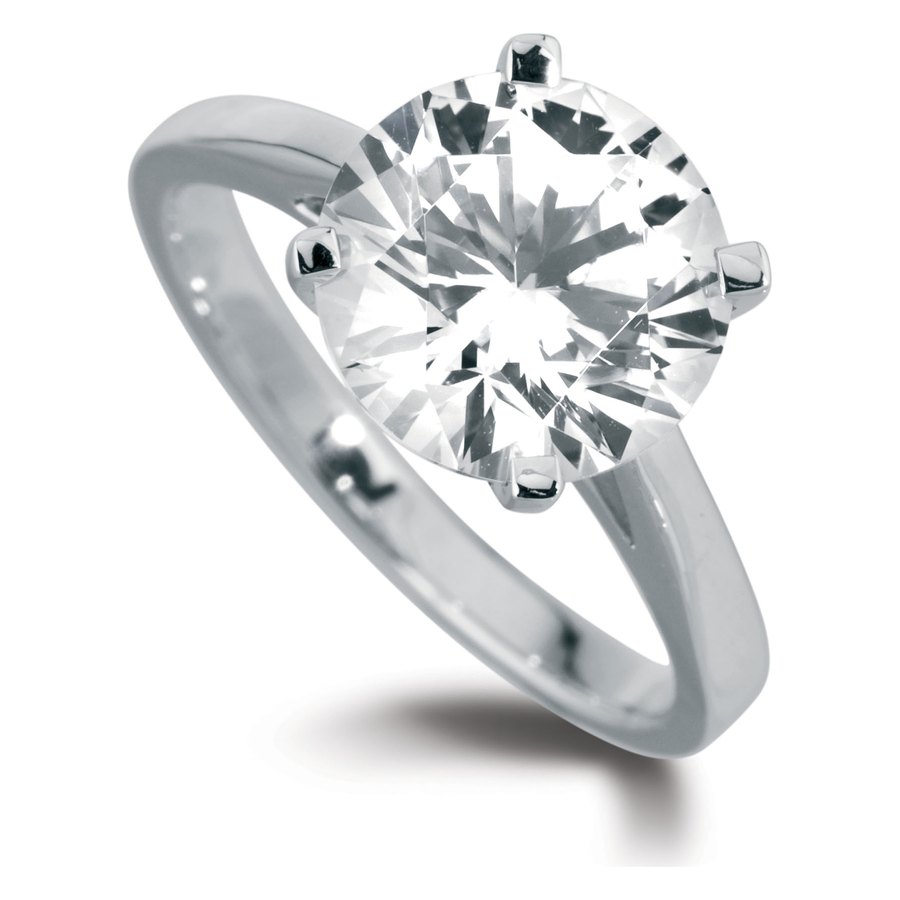
Six claws, holding a notably larger stone -
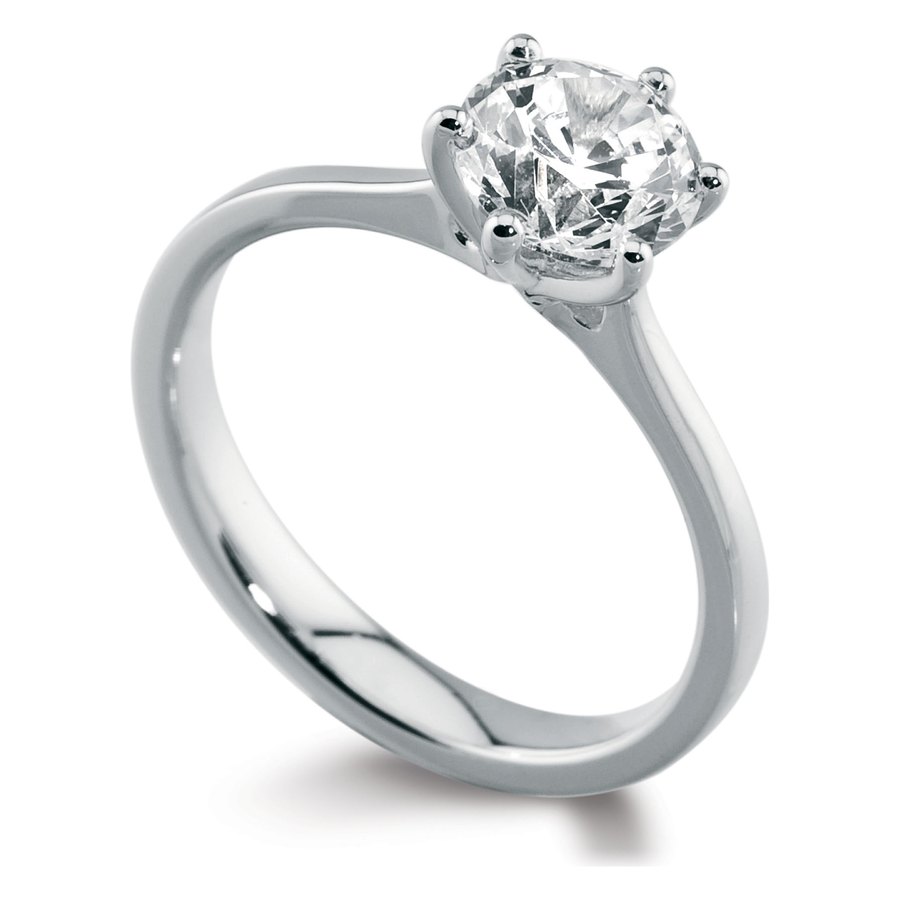
Six claws on a slim band, which exaggerates the stone -
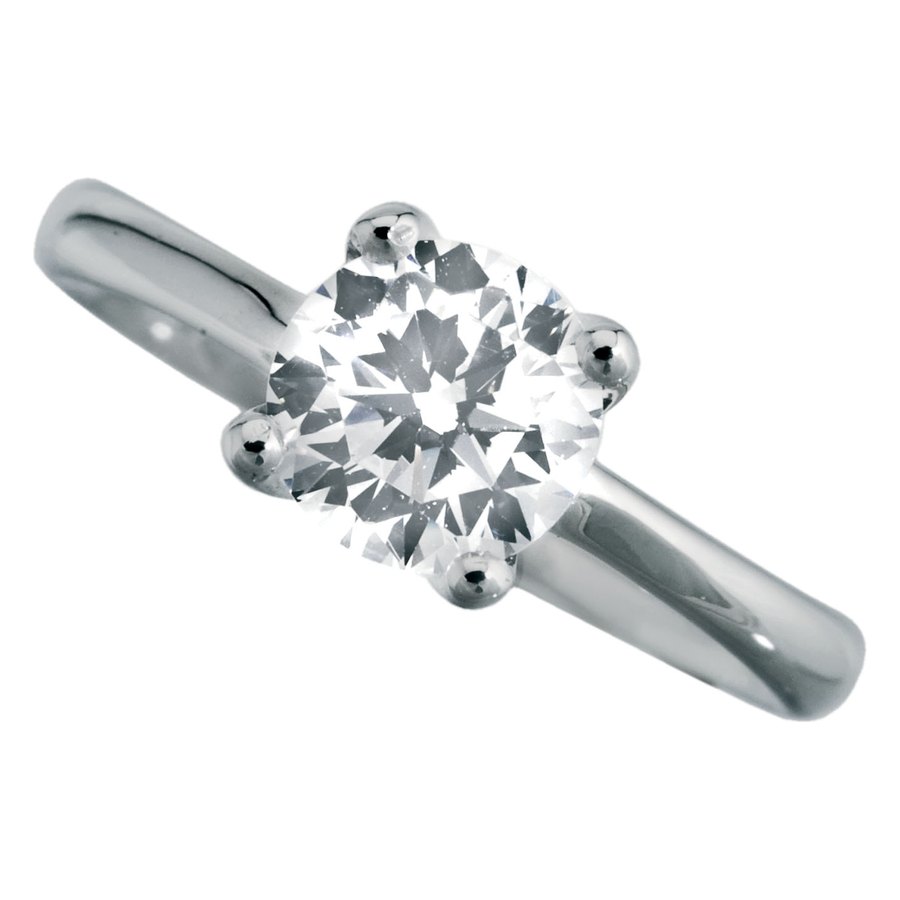
Set low and wide, almost no height above the finger -
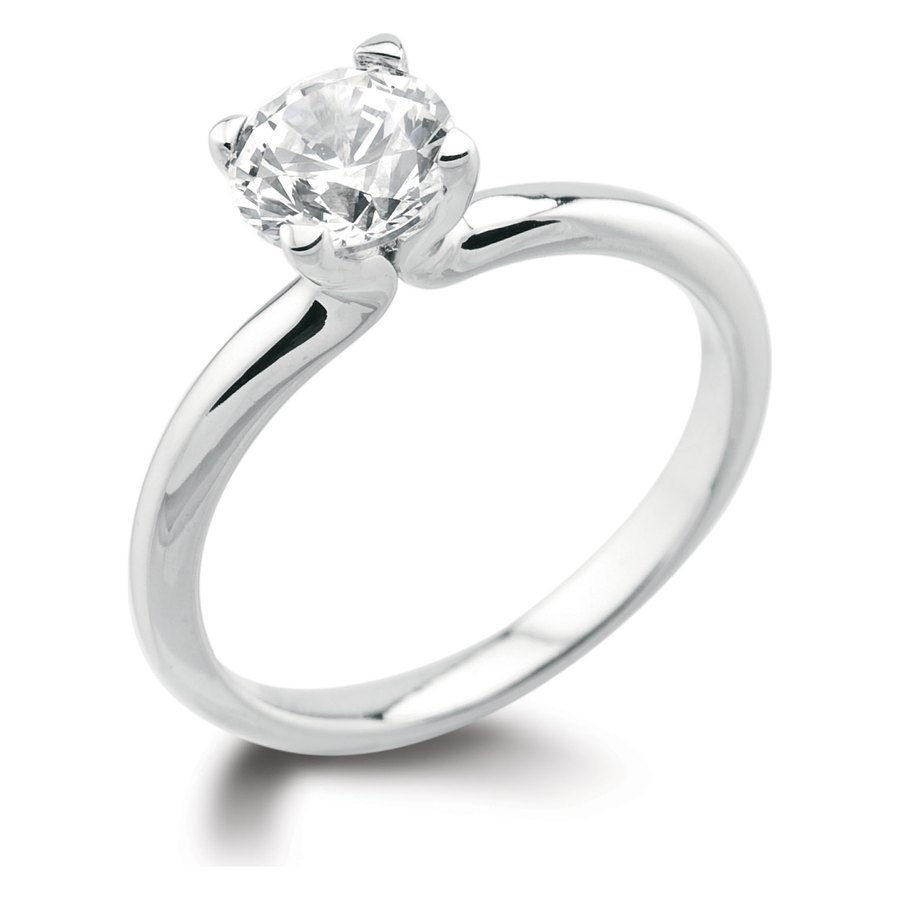
A smaller stone, proportioned to a fine band -
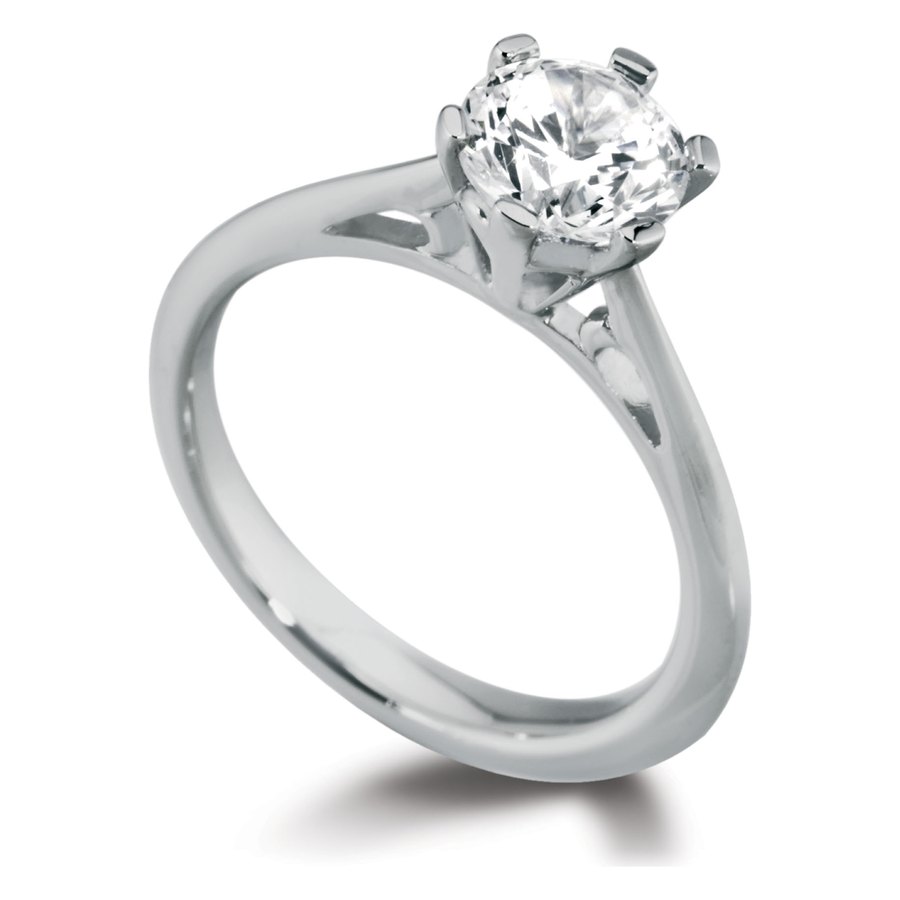
Lifted on an open gallery so light reaches the pavilion


Before you visit
Solitaire rings: the questions we get asked
Four claws or six claws on a solitaire?
Six is more secure and makes a round stone look rounder. Four shows more of the stone and gives a slightly squarer outline. If the ring will be worn constantly and never removed, six.
Do claws need maintenance?
Yes. Claws are the part of a ring that wears, and over two or three decades they thin. Having them checked every few years, and rebuilt when needed, is why antique rings still have their stones.
Why is a round brilliant more expensive than other shapes?
Two reasons. It is the most asked-for shape, and cutting one loses more of the original rough crystal than any other outline. You are paying for the weight that was cut away as well as the weight you keep.
Verified on Google
People who had one made
“We had a general idea of the stone and setting we wanted, and Simon worked with us to design something that exceeded every expectation. … We recommend Simon highly and will certainly be back, thank you!!”
“James made us feel so comfortable and made exactly what we wanted so beautifully … We would highly recommend to anyone looking for something very special!”
Other shapes


Worth reading
- How the 4Cs shape what a diamond ring costs Understand how cut, colour, clarity and carat shape what a diamond ring costs in Hatton Garden, and sense-check any price before you buy.
- Platinum, 18ct or 9ct: choosing metal for a ring you never take off How platinum, 18ct and 9ct gold differ in wear, colour, weight, allergy risk and cost, and which suits a ring worn every day.
- How a ring is made, step by step Thirty-eight photographs from wax to hallmark, taken on this bench.
- The stones, and how they are chosen Cuts, certification and what to look for before anything is set.