

Made at 62 Hatton Garden
Oval engagement rings
An oval is a brilliant cut, faceted like a round but drawn out. It covers more of the finger for the same weight, which is most of the reason people choose one.
Why an oval looks larger than a round
A round brilliant carries a lot of its weight underneath, in the pavilion. An oval of the same weight spreads wider across the top, so it reads as the larger stone when it is on the hand. That is not a trick of the setting, it is simply where the weight sits.
The elongation does something to the hand as well. A stone that runs along the finger rather than across it draws the eye lengthways, which is why ovals, marquises and pears all get described as lengthening. It is a real effect and it is more pronounced on a shorter finger.
The bow-tie, and why we will show you one
Every elongated brilliant can show a bow-tie: a dark band running across the waist of the stone where the facets fail to return light. It is a function of proportion, not of quality, and it will not appear on a certificate.
Some ovals have almost none. Some have a bow-tie you cannot unsee once it has been pointed out. The only way to know is to look at the stone, moving, in daylight. We will put it under a loupe and tell you which one you are looking at, including when the answer is that this particular stone is not worth what is being asked for it.
Setting an oval
An oval has no sharp corners and no points, so it is one of the more forgiving shapes to set. Four claws is the usual choice and shows the most stone. A rub-over, where a collar of metal wraps the girdle, protects the edge completely and suits anyone who works with their hands.
Set east to west, across the finger instead of along it, an oval stops looking traditional altogether. It is a small change on paper and a completely different ring in practice.
From the workshop archive
Oval settings
-
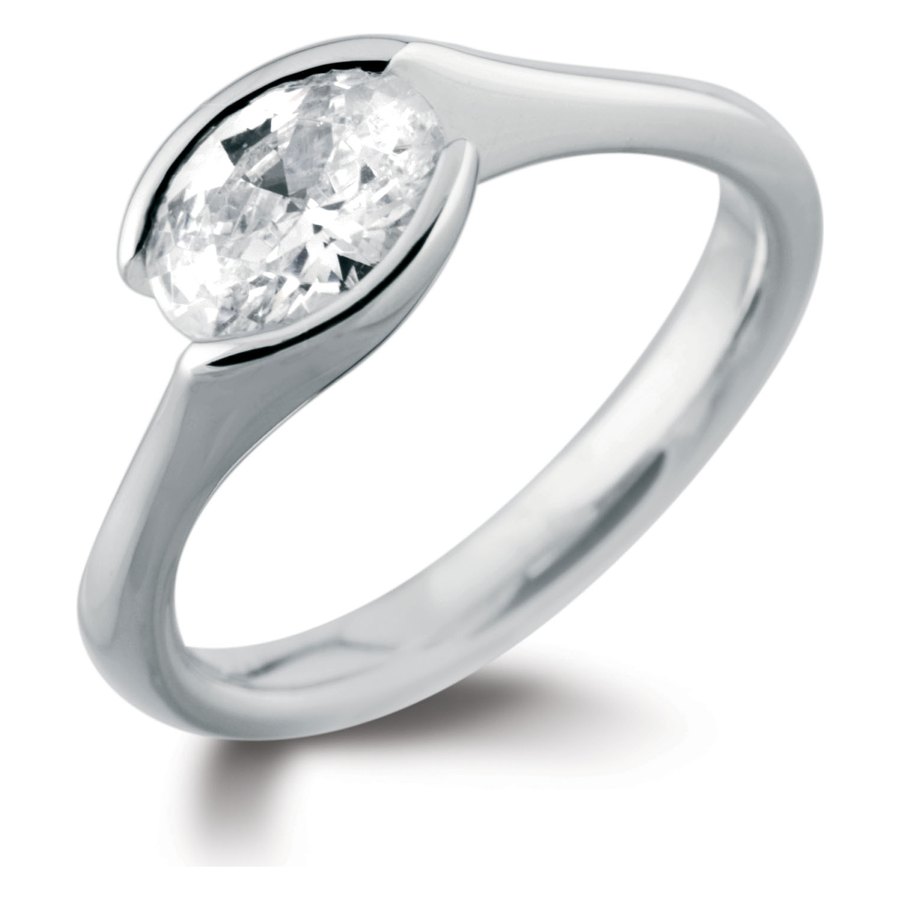
Set east to west, the shank crossing under the stone -
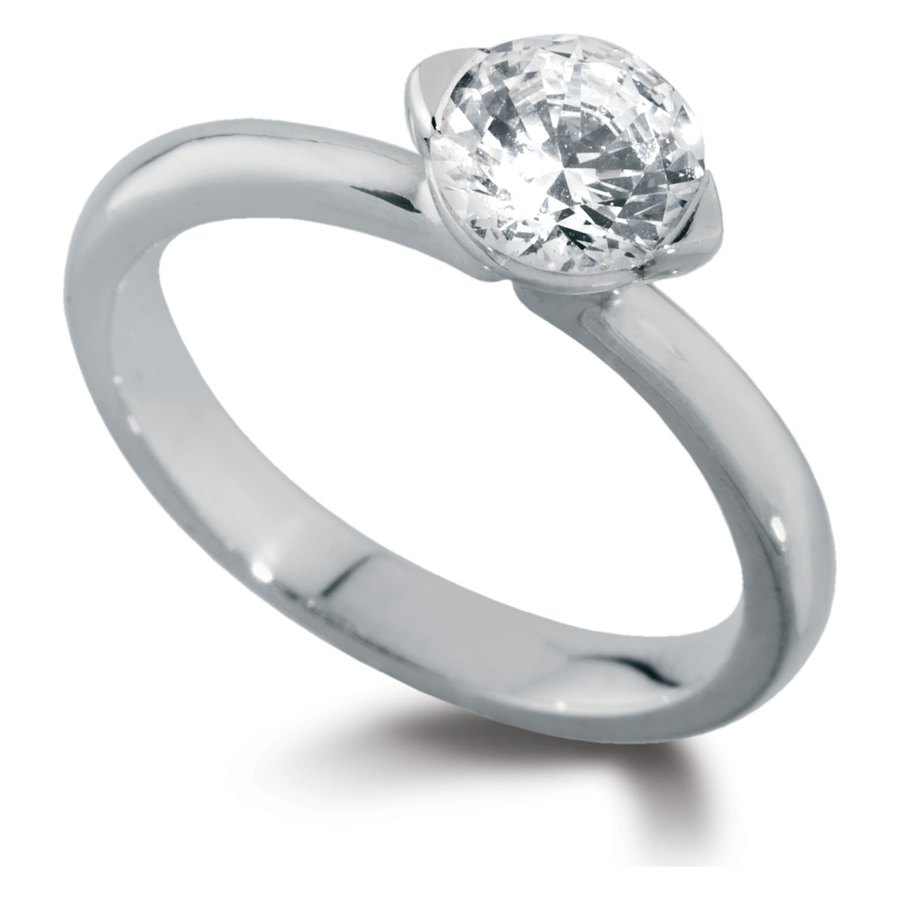
Two claws only, so almost the whole girdle stays visible -
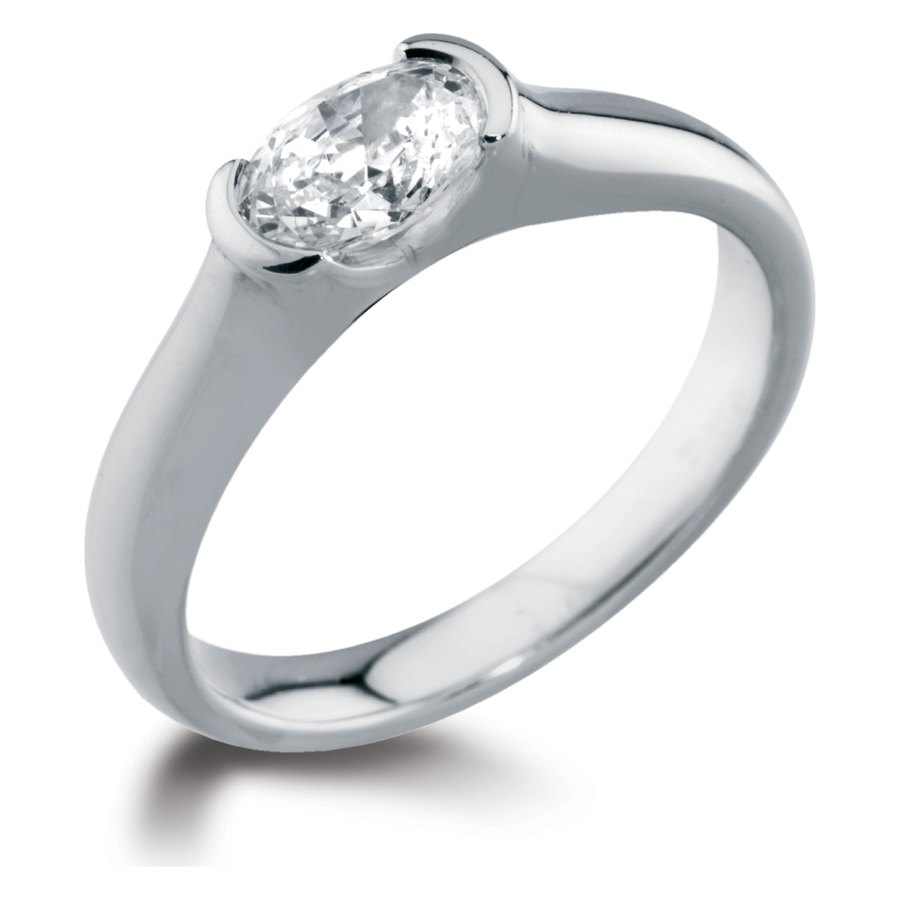
Flush into a heavier band, for a ring worn every day


Before you visit
Oval rings: the questions we get asked
Does an oval look bigger than a round diamond of the same weight?
Usually yes. An oval spreads wider across the top for the same carat weight, so it covers more of the finger. The difference is noticeable on the hand even when the two stones weigh exactly the same.
What is a bow-tie in an oval diamond?
A dark band across the middle of the stone where the facets do not return light. It comes from the proportions of the cut and it is not recorded on a certificate, so it has to be seen. Some ovals show almost none and some show a great deal.
Can I see the stone before the ring is made?
Yes. Stones are chosen first, at the bench, under a loupe, and nothing is set until you have looked at it. If you are choosing between two, we will put them side by side.
Verified on Google
People who had one made
“We had a general idea of the stone and setting we wanted, and Simon worked with us to design something that exceeded every expectation. … We recommend Simon highly and will certainly be back, thank you!!”
“James made us feel so comfortable and made exactly what we wanted so beautifully … We would highly recommend to anyone looking for something very special!”
Other shapes


Worth reading
- How the 4Cs shape what a diamond ring costs Understand how cut, colour, clarity and carat shape what a diamond ring costs in Hatton Garden, and sense-check any price before you buy.
- How a bespoke engagement ring is actually commissioned The real process of commissioning a bespoke engagement ring in Hatton Garden, from first conversation to the day you collect it, with honest timings and costs.
- How a ring is made, step by step Thirty-eight photographs from wax to hallmark, taken on this bench.
- The stones, and how they are chosen Cuts, certification and what to look for before anything is set.