

Made at 62 Hatton Garden
Marquise engagement rings
A marquise, sometimes called a navette, is a brilliant cut pointed at both ends. Of all the shapes it gives the most surface for the weight, so it wears large.
The shape that wears largest
If you want the stone to look as big as the weight allows, this is the cut. A marquise is long, shallow through the middle and almost all of it is visible from above, so very little of the weight is hidden underneath. Against a round of identical weight it can look a size and a half larger on the hand.
The story is that Louis XV asked for a stone cut to the shape of a particular courtier's smile, which is where the name comes from. It is a good story and it is the one the trade has always told.
Two points, and what to do about them
The points are the whole problem with a marquise. They are the thinnest part of the stone, they take the knocks, and a chipped point is a recut rather than a repair.
So they get protected. A V-claw folds over each tip and shields it from both sides. A rub-over wraps metal right around the stone and protects everything, which is why most of the marquises in the archive below are set that way. Either is a deliberate decision, not a default, and it is the first thing we will talk about.
Worn along or across
Set lengthways the marquise is the most finger-lengthening shape there is. Set across the finger it becomes something much more modern and much less expected.
Like the oval, a marquise can carry a bow-tie across its waist. The same rule applies: look at the stone itself, moving, before anything is decided.
From the workshop archive
Marquise settings
-
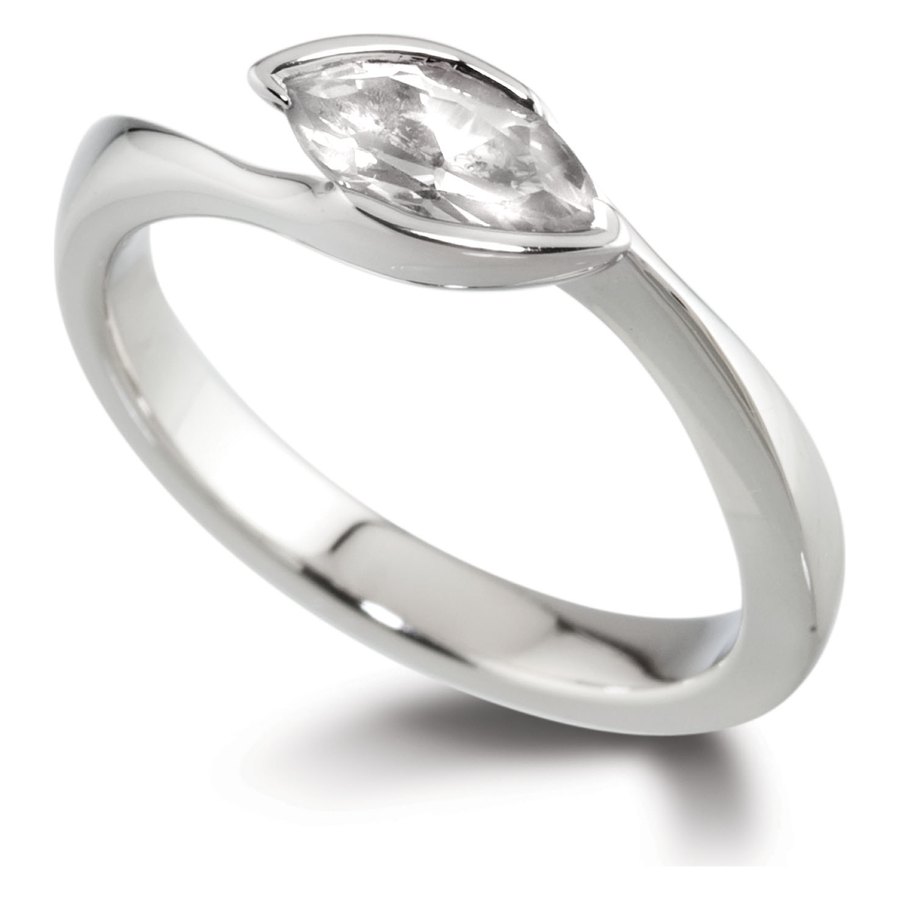
Across the finger, the shank sweeping past the stone -
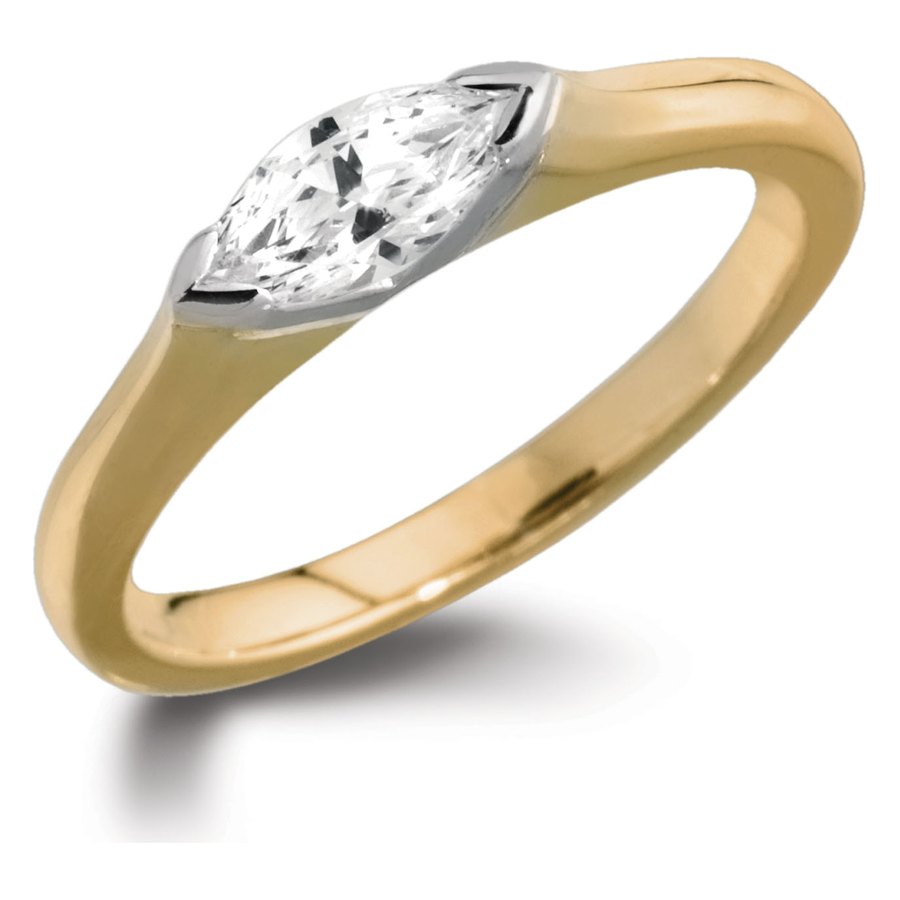
Two metals, white around the stone and yellow at the finger -
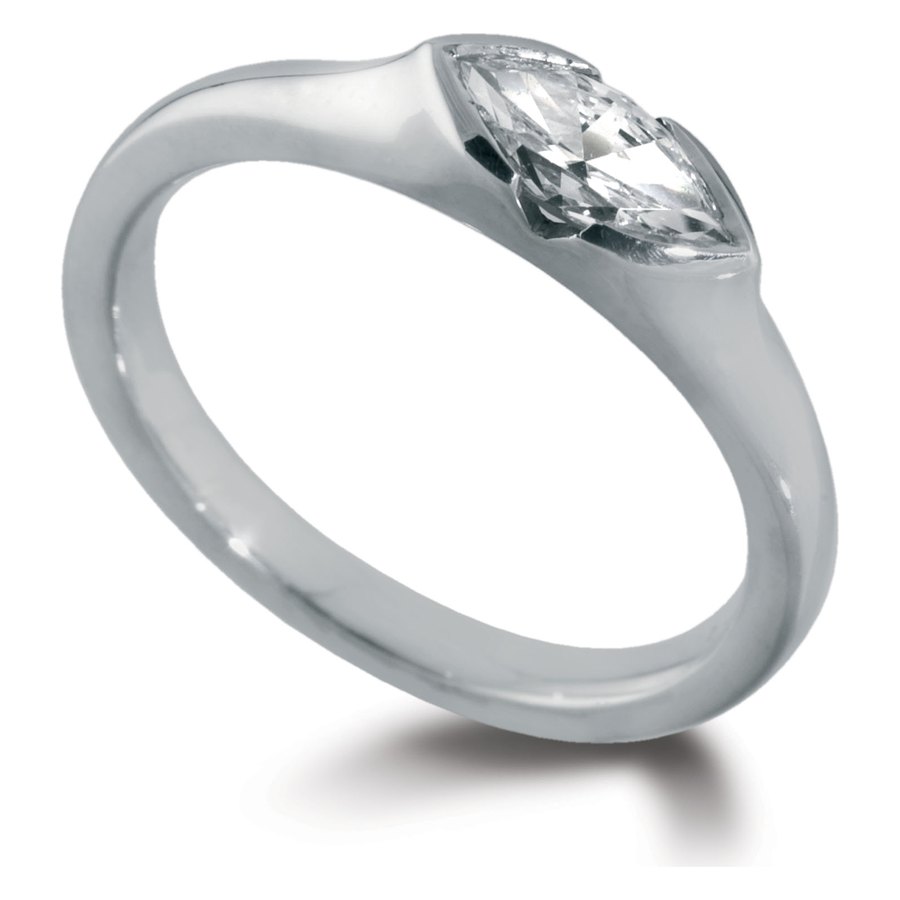
Set low into the band, nothing standing proud to catch -
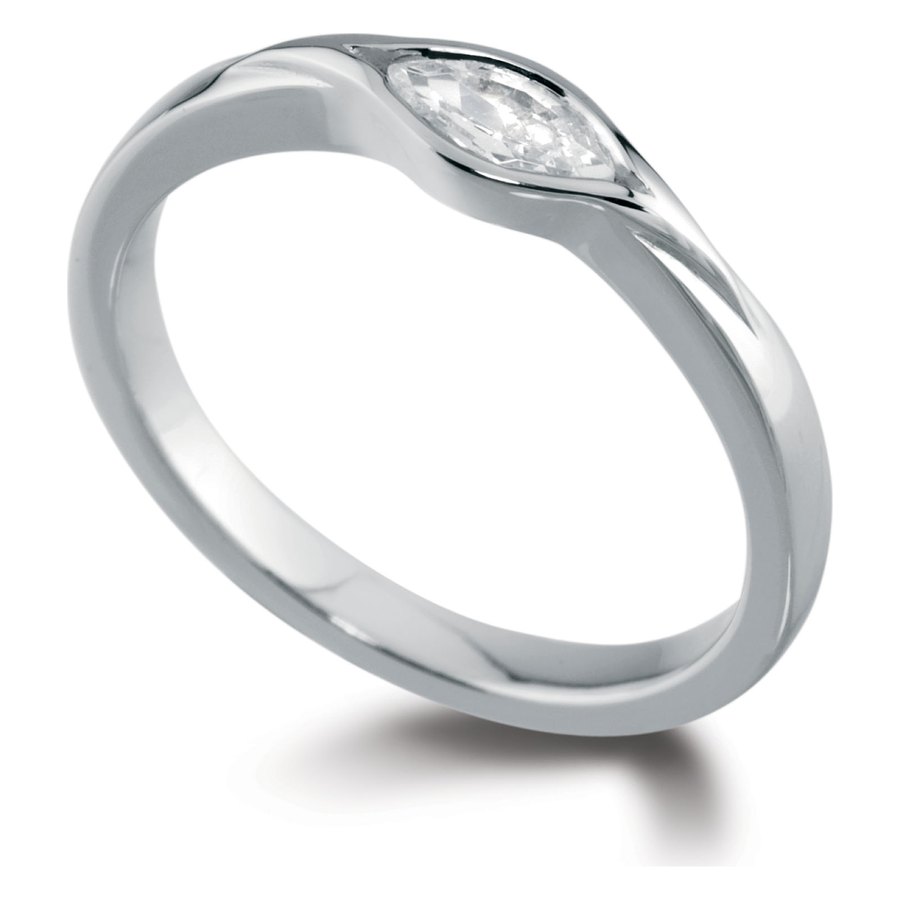
Flush into the sweep of the shank -
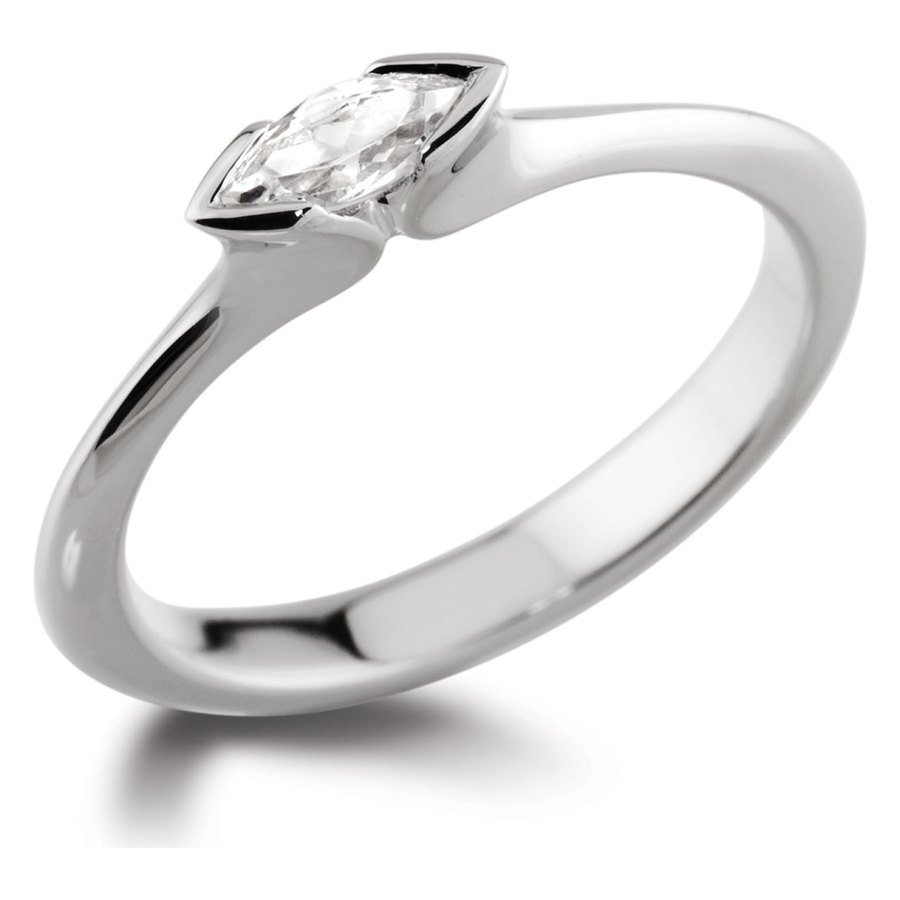
A narrower band, which makes the stone read larger still


Before you visit
Marquise rings: the questions we get asked
Are marquise diamonds fragile?
The two points are the vulnerable part, not the stone as a whole. Set with V-claws over each tip, or rub-over with a collar of metal around the girdle, a marquise is as wearable as any other shape. Set with plain claws that leave the points exposed, it is not.
Which diamond shape looks biggest for the money?
A marquise. It has the largest spread per carat of the common shapes because so little of its weight sits below the girdle. A pear and an oval come next.
Can a chipped marquise point be repaired?
Not invisibly. A chipped point normally means recutting the stone, which costs weight and changes the proportions. This is why the setting choice matters so much on this shape.
Verified on Google
People who had one made
“We had a general idea of the stone and setting we wanted, and Simon worked with us to design something that exceeded every expectation. … We recommend Simon highly and will certainly be back, thank you!!”
“James made us feel so comfortable and made exactly what we wanted so beautifully … We would highly recommend to anyone looking for something very special!”
Other shapes


Worth reading
- How a bespoke engagement ring is actually commissioned The real process of commissioning a bespoke engagement ring in Hatton Garden, from first conversation to the day you collect it, with honest timings and costs.
- Getting ring size right, and what can be resized later How UK ring sizing works, why fingers change through the day and the year, how to size a surprise ring, and which designs cannot be resized at all.
- How a ring is made, step by step Thirty-eight photographs from wax to hallmark, taken on this bench.
- The stones, and how they are chosen Cuts, certification and what to look for before anything is set.